Wheelchair Platform Lifts for Garages & Outbuildings UK: Reviews & Installation Tips
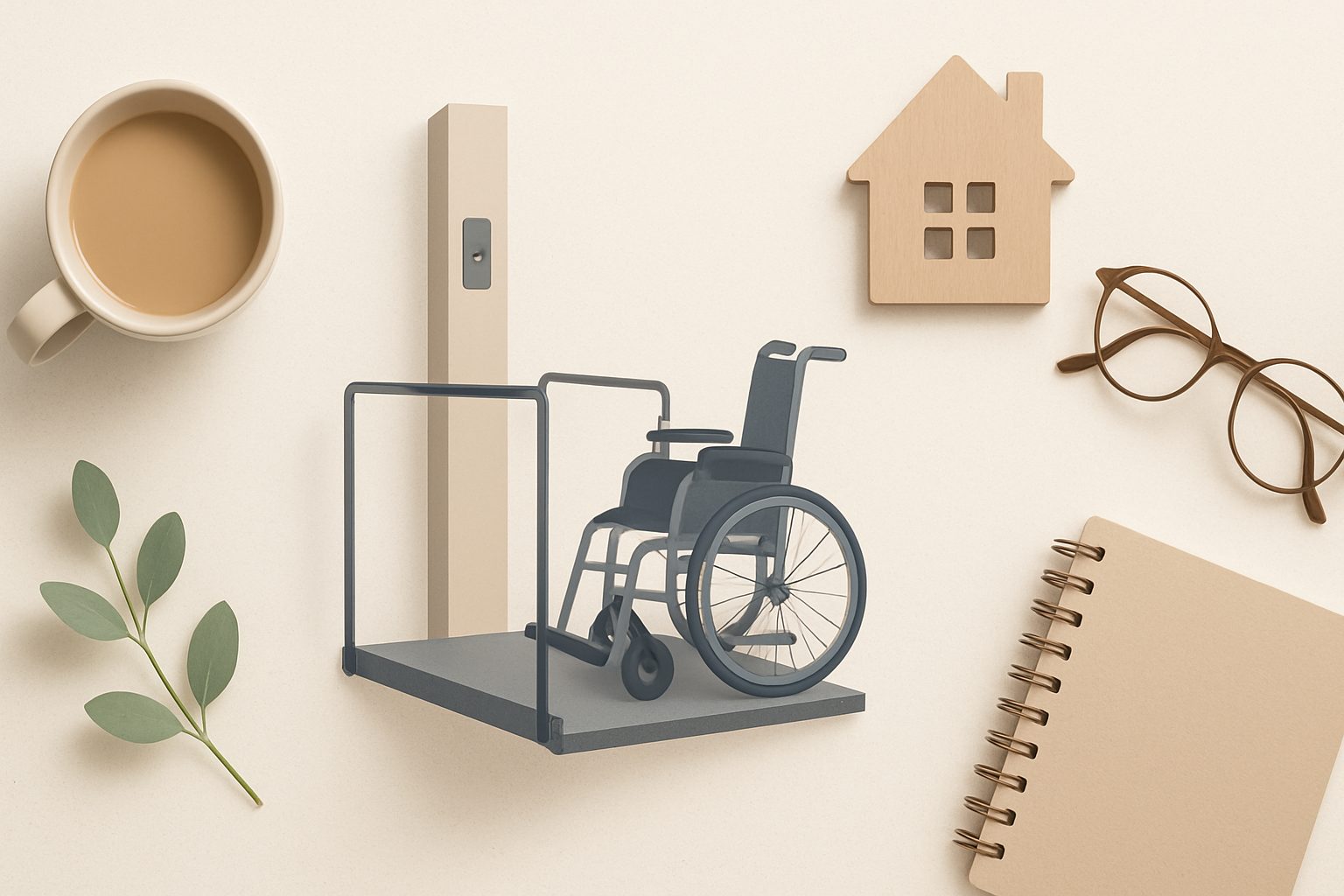
If you need to access a garage, workshop, or outbuilding from ground level whilst using a wheelchair, a platform lift is often the most practical solution. Unlike ramps—which require significant space and shallow gradients—platform lifts fit into confined areas and handle larger height differences reliably. This guide covers domestic and industrial-grade options available in the UK, what to look for, and what installation actually involves.
Why Platform Lifts Work for Garages and Outbuildings
Most domestic garages sit at least 300–600mm above ground level. Annex steps, converted sheds, and workshop entrances often sit higher still. A wheelchair ramp to span that height would need 6–12 metres of length, depending on the slope. Most residential properties simply don't have that space.
A platform lift occupies the footprint of the step or threshold itself—typically 1–1.5 metres wide and 1–2 metres deep—while raising a wheelchair user vertically. It's self-contained, requires no excavation, and works year-round without the icing, puddling, or grip concerns of outdoor ramps.
The trade-off is that platform lifts are mechanical devices. They need a power supply, occasional servicing, and won't function during a power cut (though models with battery backup exist). They're also louder than ramps and slower than walking up steps—typically 10–20 seconds per cycle.
For seasonal or infrequent access, this is a genuine limitation. For daily use, it's usually manageable.
Types and Sizes Available in the UK
Residential Platform Lifts
Domestic models are designed for single-user weight (typically 120–160kg payload) and lighter-duty cycles. They range from 800mm to 1200mm wide and usually lift 300–800mm. Installation requires a 2–3kW supply; most older garages will need an electrician to upgrade the circuit.
Leading manufacturers include ThyssenKrupp, Stannah, and TK Lifts. Expect £8,000–£15,000 installed, including engineering surveys and concrete works. Delivery and fitting typically takes 4–8 weeks.
Industrial and Heavier-Duty Models
If the garage is shared, used commercially, or needs to accommodate mobility scooters (which are heavier and bulkier than manual wheelchairs), industrial platform lifts are more robust. These handle 200–300kg payloads and are built for higher cycle rates. They're wider (1400–1600mm), sometimes heavier, and command prices of £15,000–£25,000.
Compact Scissor-Style Lifts
A middle ground exists: compact scissor platforms that collapse when lowered, saving space. These work well for annex steps or where ground storage is tight. They're slower than hydraulic lifts and less robust for frequent use, but cost roughly £6,000–£10,000.
Key Specifications to Compare
Load Capacity
Match this to actual use. A manual wheelchair user rarely exceeds 160kg (chair plus occupant). A mobility scooter easily reaches 200–250kg. If multiple people use the garage or you anticipate future needs, choose 180kg minimum.
Lift Height
Measure the actual vertical distance from ground to garage threshold. Add 50–100mm for buffer. Don't assume a 600mm step—many Victorian garages are 450mm; modern builds vary widely.
Platform Dimensions
The platform must fully support the wheelchair footprint with 100mm clearance on either side. A manual wheelchair is typically 650–700mm wide; a scooter can be 750–800mm. Depth should accommodate the full wheelbase plus 200mm safety margin.
Cycle Time
Domestic models lift at 10–15mm per second; industrial models slightly faster. A 600mm lift takes roughly 45–60 seconds. For daily use, this becomes routine. For occasional access, it's less critical.
Safety Features
Non-slip platform surfaces are essential—wet concrete or paint is treacherous. Look for models with lip guards (to prevent wheels rolling off), emergency descent (hydraulic manual release), and platform edge sensors. Motion sensors that stop the lift if something blocks the platform are standard on quality units.
Noise
Hydraulic pumps are audible—expect 75–85dB, similar to a vacuum cleaner. Electric screw-driven models are quieter (70–75dB). If the garage adjoins a bedroom, mention this to the installer.
Installation Reality
Installation isn't simply bolting a unit to the step. Most platforms require:
- Concrete pad construction (if the garage floor is uneven or unstable)
- Electrical circuit upgrade or new supply (consult a qualified electrician; garages often have outdated wiring)
- Structural assessment of the garage entrance and lintel
- Possible building regulation approval (required in many councils for permanent structures)
- Removal and disposal of the existing step
A professional survey is essential. Cheap quotes that skip this often end in problems—subsidence, poor electrical work, or structural failure.
Installation timescale: 1–3 days on-site, but total project duration (survey, building regs, approval, manufacturing, installation) runs 8–12 weeks.
Honest Pros and Cons
Pros:
- Works in any weather, unlike ramps
- Takes up minimal footprint
- Reliable mechanical operation once installed
- Typically lasts 15–20 years with basic servicing
Cons:
- Significant upfront cost
- Requires electricity and occasional maintenance
- Slower than walking or ramping
- Unsuitable for power cuts without battery backup
- Building regulation approval may delay installation
- Noisy compared to passive access solutions
Cost and Budgeting
Total cost includes the unit (£6,000–£15,000), installation labour (£2,000–£4,000), electrical work (£1,000–£2,000), concrete or structural works (£500–£2,000), and building regulation approval (£200–£500 plus potential remedial works if the surveyor identifies issues).
Realistic budget: £10,000–£24,000 all-in. Obtain 3–4 quotes; genuine specialists should be willing to do a detailed site survey before pricing.
Some local authorities offer grants or disabled facilities funding; contact your council's social services or occupational therapy team.
What to Ask Installers
- Do they carry public liability and professional indemnity insurance?
- Will they obtain building regulation approval, or will you?
- What's included in the maintenance package? (Annual servicing is usually £200–£400)
- Do they provide a warranty? (Reputable firms offer 3–5 years)
- Can they reference recent garage lift installations in your area?
Platform lifts solve a genuine access problem where ramps are impractical. The cost is substantial, but for daily use they're reliable and durable. Start with a professional survey and compare options honestly—there's no single best model, only the right choice for your space and budget.
More options
- Portable Wheelchair Platform Lifts – Amazon UK (Amazon UK)
- Folding Wheelchair Ramps – Amazon UK (Amazon UK)
- Suitcase & Travel Wheelchair Ramps – Amazon UK (Amazon UK)
- Threshold & Kerb Ramps – Amazon UK (Amazon UK)
- Stairlift & Platform Lift Accessories – Amazon UK (Amazon UK)