Wheelchair Platform Lift vs Full Home Lift UK: Which Should You Install?
If you're adapting your home for wheelchair access, you've likely encountered both platform lifts and full home lifts. Both solve the same core problem—moving between floors—but they work differently and suit different situations. Understanding the practical trade-offs will save you money and regret later.
The Core Difference
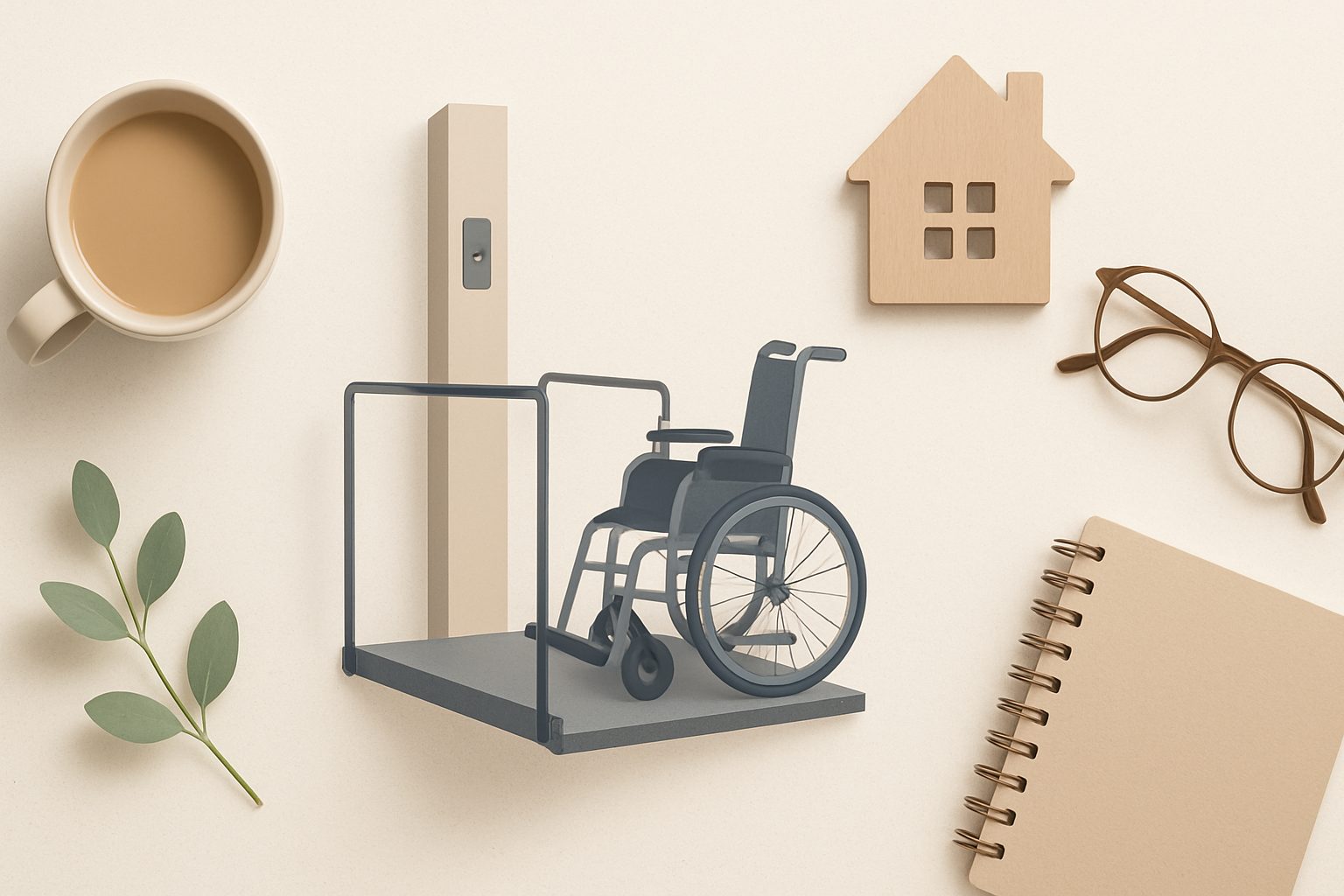
A platform lift (also called a vertical or stairlift with a platform) is essentially a powered platform that rises and falls vertically in front of your existing staircase or through an opening. Your wheelchair rolls on, the platform rises, and you roll off upstairs.
A full home lift (through-floor or shaft lift) is a small elevator that creates its own enclosed space. You roll into a car, close the door, and ascend—more like a tiny lift in a commercial building.
The distinction matters because each requires different structural work, takes up different space, and costs different amounts.
Cost: The Biggest Factor
This is usually the deciding point. Platform lifts typically cost £8,000 to £18,000 installed, depending on the lift height and model. They're simpler machines with fewer safety systems.
Full home lifts run £25,000 to £50,000+ because they require a shaft, reinforced openings in multiple floors, and more sophisticated engineering. A two-storey installation sits at the lower end; three storeys or a tight space pushes costs higher.
If budget is tight and you only need to access one or two flights, a platform lift is the practical choice. If you're already doing substantial renovation work or have multiple floors, a full lift might justify the extra cost over time.
Space and Structural Requirements
Platform lifts need surprisingly little space—roughly the footprint of a standard wheelchair plus the staircase itself. They mount directly to your existing stairs or a small external platform. If your hallway is tight, this matters.
Full lifts require a shaft, which typically means an enclosure of around 1.2m × 1.2m minimum. If your home doesn't have space in the footprint (or if cutting through floors is impractical), a full lift becomes genuinely difficult. Listed buildings and period properties often rule out shaft lifts because the external or internal structures become too visually intrusive.
Installation Time and Disruption
Platform lifts usually take 2–5 days to install. There's no major structural work—mostly fixing a track to your stairs and connecting power.
Full lifts take weeks. You need planning, surveying, structural modifications, reinforcement of joists, and potentially significant decoration afterwards. Dust, noise, and having your home disrupted for 3–6 weeks is the norm.
Speed and Convenience
Platform lifts move slowly—around 0.15 m/s, so a single flight takes roughly 20–30 seconds. It's functional, not fast.
Full lifts are quicker—typically 0.4 m/s—and feel more like using a real lift. For someone moving between floors multiple times daily, this adds up to genuine convenience.
If you're accessing upstairs once or twice a day, platform-lift speed is fine. If you're moving between floors constantly or living in a multi-storey home, a full lift's speed becomes more valuable.
Aesthetics and Integration
This often gets overlooked until installation day.
Platform lifts are visibly industrial. Even the sleek models look like machinery. They're mounted to your staircase or external wall, and there's no hiding them. If your home's appearance matters to you (or resale value concerns you), this is worth considering honestly.
Full lifts integrate better visually because the machinery is enclosed. From the hallway, you see a lift door—familiar and unobtrusive. The external footprint is smaller and less obviously 'adaptive equipment.'
Resale and Property Value
Honest answer: both lifts reduce appeal to typical buyers, but in different ways.
A platform lift signals that the property is mobility-adapted, which narrows your buyer pool. However, the cost to remove is relatively low (£2,000–£4,000), so buyers can see a future without it.
A full lift is more integrated and looks more permanent. Some buyers see this as a feature (universal design), but others see structural complexity and higher removal costs. Removal of a shaft lift costs £8,000–£12,000 and leaves structural gaps that need finishing.
For pure resale value, neither helps. But a full lift causes less visual disruption if you're trying to market a property afterward.
Which Should You Choose?
Choose a platform lift if:
- Budget is your primary constraint
- You have a simple two-storey layout
- You only access upper floors occasionally
- Your staircase is accessible for mounting
- You're renting or want easy removal
Choose a full lift if:
- You're doing major renovation work anyway
- Space and integration matter more than cost
- You move between floors many times daily
- You have three or more storeys
- You want the least visual impact on the home's appearance
The Next Step
The right choice depends on your specific home layout, how you use your spaces, and your budget. A proper survey by an installer in your area—they'll assess your stairs, floor structures, and space—is essential before deciding. Different homes throw up different challenges that change the equation entirely.
If you're leaning toward a platform lift, understanding installation options (external vs. internal, straight vs. curved tracks) matters next. If a full lift appeals, the through-floor models vary significantly by type and cost. Reading through your specific options alongside the actual quotes you'll receive is the realistic way forward.
More options
- Portable Wheelchair Platform Lifts – Amazon UK (Amazon UK)
- Folding Wheelchair Ramps – Amazon UK (Amazon UK)
- Suitcase & Travel Wheelchair Ramps – Amazon UK (Amazon UK)
- Threshold & Kerb Ramps – Amazon UK (Amazon UK)
- Stairlift & Platform Lift Accessories – Amazon UK (Amazon UK)