Vertical Platform Lift vs Stairlift UK: Which Is Right for Your Home?
If you're looking to improve accessibility in your home, you've probably stumbled across both vertical platform lifts and stairlifts. They solve similar problems but in very different ways, and which one suits your needs depends on your specific situation, space, and budget.
Both solutions are common in UK homes, and both have genuine merits. Rather than declaring one "better", this guide walks through the practical differences so you can make an informed choice.
What's the Difference?
A stairlift runs along your existing staircase—either curved or straight—and carries a seat. The user sits, presses a button, and travels up or down the stairs. It's been the go-to mobility solution for decades and works on almost any stair configuration.
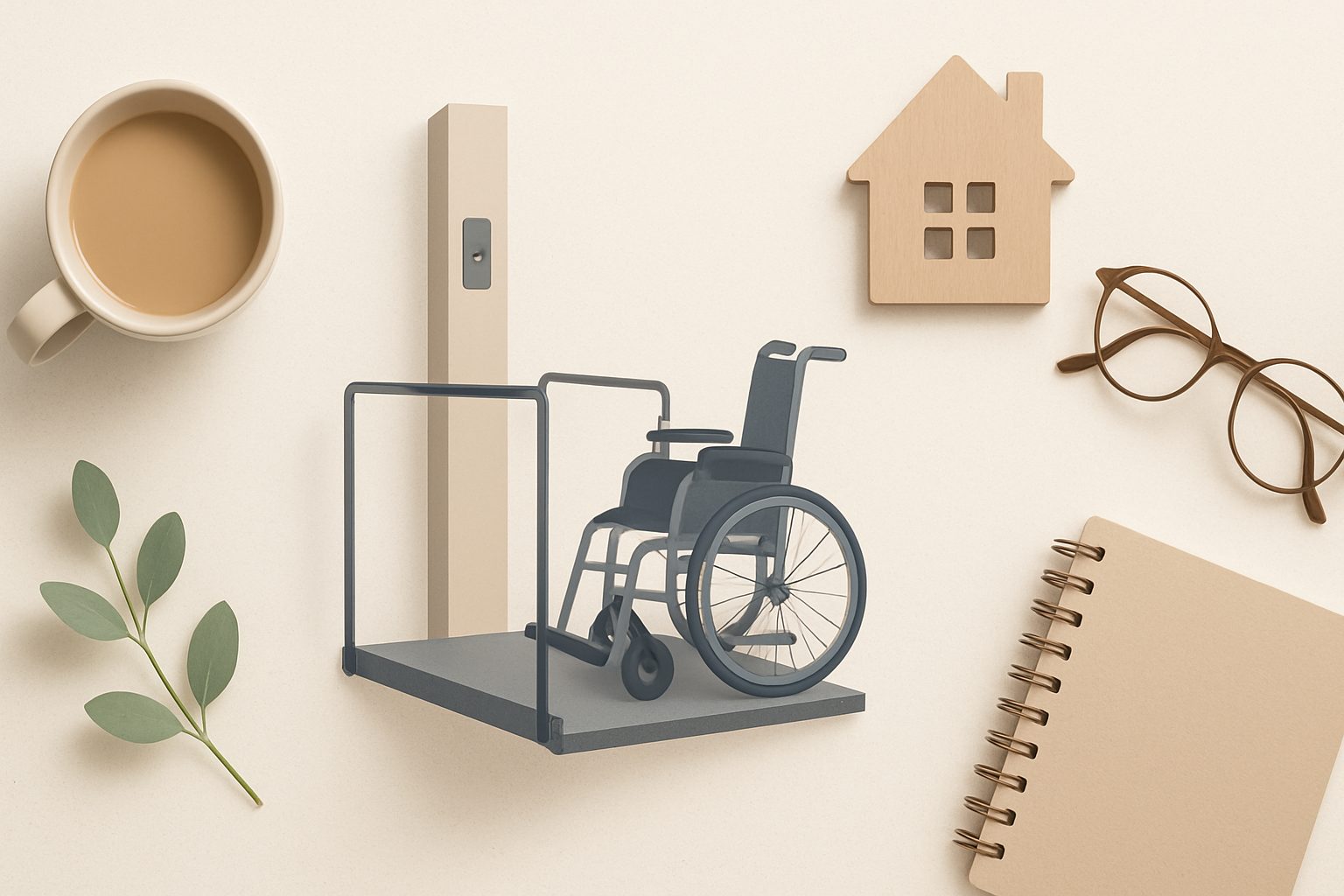
A vertical platform lift (also called a platform lift) is a small, motorised platform that rises vertically, typically in a dedicated shaft or against an external wall. The user drives or walks onto the platform, and it lifts them between floors. No stairs are involved.
Cost Comparison
Stairlifts are generally cheaper upfront. A straightforward straight stairlifts cost £2,000–£5,000. Curved stairlifts, which require custom manufacture, run £5,000–£15,000 depending on complexity.
Vertical platform lifts cost more: typically £8,000–£20,000 for a domestic installation, depending on height and complexity. If significant building work is needed—creating a shaft, structural reinforcement, electrical upgrades—costs climb further.
Maintenance costs favour stairlifts slightly. Annual servicing runs £100–£300. Platform lift servicing is similar, but repairs can be pricier due to more complex mechanical and hydraulic systems.
On the flip side, platform lifts often retain resale value better in homes with multi-level layouts, whereas stairlifts can be harder to shift when selling.
Space Requirements
This is where the differences become crucial.
Stairlifts use minimal additional space—they attach to your existing staircase. You lose a small amount of stair width (roughly 15cm), but otherwise your hall and landing remain accessible. The footprint is negligible.
Platform lifts demand dedicated space. A typical domestic lift measures roughly 1.1m × 1.1m and needs clearance around it. If you're installing one internally, you're essentially building a small shaft that takes up living space. External installations (against an outside wall) work better where space is tight indoors, but they require weather protection and add visual impact to your home's exterior.
If your home is compact or your hallways are narrow, a stairlift is almost certainly the more practical choice.
Suitability: Wheelchair Users
Platform lifts shine here. If the user is a wheelchair user or has very limited mobility, a platform lift eliminates the need to transfer from a wheelchair to a seat. They simply roll on, secure the chair, and ride up. It's the only option for full wheelchair accessibility between levels.
Stairlifts require transfer. The user must be able to move from their wheelchair to the stairlift seat—or be lifted/assisted in doing so. Some people manage this independently; many need caregiver support. It's doable, but it's an extra step, and it demands a degree of upper-body strength or assistance that not everyone has.
For wheelchair users, a platform lift is more than a convenience—it's often the difference between genuine independence and needing help every time they move between floors.
Suitability: Ambulant Users and Older Adults
This is where stairlifts typically make more sense.
Many people who struggle with stairs—due to arthritis, breathlessness, general weakness, or balance issues—can still walk and use stairs with support; they just can't manage them safely or comfortably. A stairlift requires no special equipment or setup. You sit, hold on, and ride. Many older adults find stairlifts psychologically easier because they remain seated—no balancing act on a moving platform.
The risk of falling on the platform, or the disorientation some feel in an enclosed shaft, can actually make platform lifts less appealing for purely ambulant users with balance issues. For this group, the simplicity and familiarity of a stairlift often wins.
Platform lifts are also better suited to households with multiple users of different abilities or where the lift might eventually need to double as a goods lift for moving furniture or shopping.
Appearance and Disruption
Stairlifts are visible but fairly discreet—modern designs are sleeker than older models. They sit on your stairs and you grow accustomed to them. Some people find them visually cluttered; others don't mind.
Platform lifts are more intrusive, especially external ones. They alter the look of your home's exterior or carve out visible space indoors. If aesthetics matter to you, this is a real consideration.
Maintenance and Longevity
Both last 10–15 years with proper servicing. Stairlifts are mechanically simpler, which means fewer things can go wrong and repairs tend to be quicker. Platform lifts have hydraulic or screw-driven systems that are more complex and occasionally more troublesome.
If you're in a rural area with limited local engineers, a stairlift's wider availability of service technicians might sway your choice.
Summary
Choose a stairlift if: you're mainly looking to help ambulant users or older adults navigate stairs safely, space is limited, budget is a concern, or the user can manage the transfer from a wheelchair.
Choose a platform lift if: you have a wheelchair user who needs full independence, you have the space and budget, or you want the flexibility of moving goods between floors alongside people.
Both work well. The right choice depends on your household's specific needs, your home's layout, and who will actually use the lift day to day.
More options
- Portable Wheelchair Platform Lifts – Amazon UK (Amazon UK)
- Folding Wheelchair Ramps – Amazon UK (Amazon UK)
- Suitcase & Travel Wheelchair Ramps – Amazon UK (Amazon UK)
- Threshold & Kerb Ramps – Amazon UK (Amazon UK)
- Stairlift & Platform Lift Accessories – Amazon UK (Amazon UK)