Through-Floor Wheelchair Lifts UK: Complete Buyer Guide 2025
Through-floor lifts offer a discreet accessibility solution for people with mobility challenges, fitting neatly into your existing home without the visible footprint of a stairlift. Unlike stairlifts that run along the stairs, through-floor lifts travel vertically through a shaft in your floor, making them ideal if you want to preserve your home's aesthetic or simply have limited wall space. This guide covers how they work, what structural changes you'll need, planning rules, and realistic costs.
How Through-Floor Lifts Work
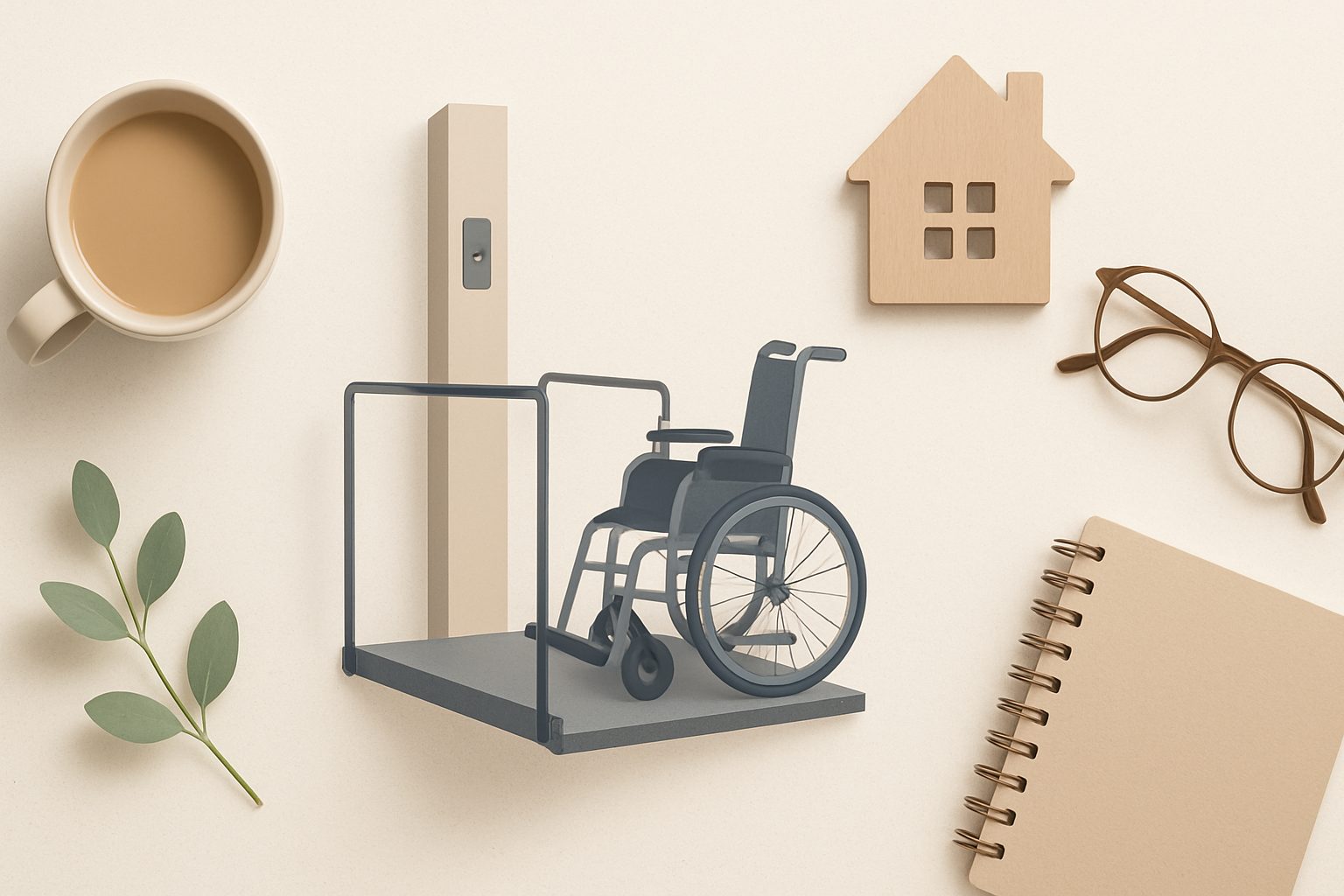
A through-floor lift operates like a small hydraulic or mechanical elevator. The platform sits at ground level (or wherever you position it) and rises vertically through a compact opening in your floor above. The mechanism is typically housed beneath the flooring or in a small external shaft, hidden from view when the platform descends.
Most residential models use one of two technologies:
- Hydraulic systems: Quieter and smoother, but require occasional maintenance on fluid levels and seals.
- Mechanical systems: Generally simpler and cheaper, though noisier during operation.
The platform itself is usually 1–1.5 metres square, enough for a wheelchair user and carer, and rise heights typically range from 600mm to 3 metres depending on your property structure.
When a Through-Floor Lift Makes Sense
Through-floor lifts work best if you:
- Have a two-storey home with solid construction that can accommodate a shaft
- Want a less visually intrusive option than a stairlift
- Need access for a wheelchair user where stairlifts would be impractical
- Have room on the ground floor for the lift footprint
- Prefer not to use external ramps due to space or planning constraints
They're less ideal if you're renting (installation requires permanent structural work), have suspended timber floors (more complex to retrofit), or only need to lift a person occasionally—a stairlift might be simpler and cheaper.
Structural Requirements
This is the critical hurdle. A through-floor lift needs:
Flooring and structure: Your upper floor must be strong enough to carry the lift's weight (typically 500–1000kg loaded) plus structural reinforcement. If you have traditional suspended timber joists, you'll need steel beams installed to support the shaft opening. Solid concrete floors are easier to work with—the surveyor simply calculates the opening size and reinforcement needed.
Space below: You need clear space beneath the upper floor for the lift mechanism and power connections. Basements or cellars are ideal; tight crawl spaces complicate installation. You also need accessible space for maintenance.
Opening size: The floor opening is typically 1–1.5 metres square. You'll lose that floorspace on both levels, plus a small "safe zone" around the shaft.
Electrical and hydraulic runs: Cables and pipes run through walls or the floor structure to connect the lift to power and, if hydraulic, fluid reservoirs.
A structural engineer survey is mandatory before purchase—this isn't something to estimate guesswork. The cost is £300–600 but essential. They'll advise whether the lift is feasible and what reinforcement is needed.
Planning Permission and Building Regulations
Building Regulations approval is required. You'll submit plans showing the lift installation, structural calculations, electrical design, and method statement. Approval typically takes 4–6 weeks. This is non-negotiable and your installer should manage it.
Planning permission is usually not required if the lift is entirely internal—modifications inside your home don't normally need planning. However, if your lift creates a new external feature (e.g., a penthouse housing the mechanism on the roof, or external ductwork), you may need planning consent. Your surveyor or installer will confirm what applies to your property.
There's also the disabled facilities grant option. Some councils offer grants up to £30,000 for accessibility adaptations. Eligibility depends on means-testing and council policy. It's worth asking your local occupational therapist or council's housing team whether you qualify.
Cost Reality
Installed cost: £15,000–35,000 for a standard domestic through-floor lift, fitted.
This range reflects:
- Lift model and capacity (basic two-stop lifts at the lower end; larger or longer-rise versions higher)
- Structural work required (if your floor needs reinforcement, add £2,000–5,000)
- Access and site conditions (tight stairwells or confined spaces cost more)
- Installation complexity (solid floors easier than timber joists)
- Engineer reports and Building Regs approval fees (£500–1,200)
Budget separately for decorative repairs—plasterwork, flooring, and painting around the shaft opening afterward.
Maintenance contracts typically run £200–400 annually for hydraulic systems, less for mechanical ones.
Key Points When Buying
- Get multiple quotes: Lift companies vary in their surveying thoroughness and pricing structure. Three quotes help you compare fairly.
- Check the warranty: Most come with 1–2 years' parts and labour; ask what's covered in extended warranties.
- Inspect site access: Make sure the surveyor/engineer can fully assess your property. Hidden issues (asbestos in old flooring, undersized joists) can derail installation.
- Ask about spare parts and servicing: Older or niche brands may have supply or technician availability issues.
- Noise and operation: Visit a showroom or ask for an installation reference nearby. Hydraulic lifts are noticeably quieter during use.
- Emergency descent: Confirm the lift has a manual descent mechanism in case of power loss.
Next Steps
For a detailed cost breakdown for UK models, see our through-floor lift costs guide, which compares five popular systems with real-world pricing.
If you're exploring options, our top 5 through-floor lifts article reviews the leading UK suppliers by capacity, reliability, and value.
Start with a structural survey if your home is a likely candidate—that's your clearest signal whether a through-floor lift is feasible and what you're realistically looking at in terms of cost and disruption.
More options
- Portable Wheelchair Platform Lifts – Amazon UK (Amazon UK)
- Folding Wheelchair Ramps – Amazon UK (Amazon UK)
- Suitcase & Travel Wheelchair Ramps – Amazon UK (Amazon UK)
- Threshold & Kerb Ramps – Amazon UK (Amazon UK)
- Stairlift & Platform Lift Accessories – Amazon UK (Amazon UK)