Best Home Wheelchair Lifts UK 2025: Reviews & Comparison
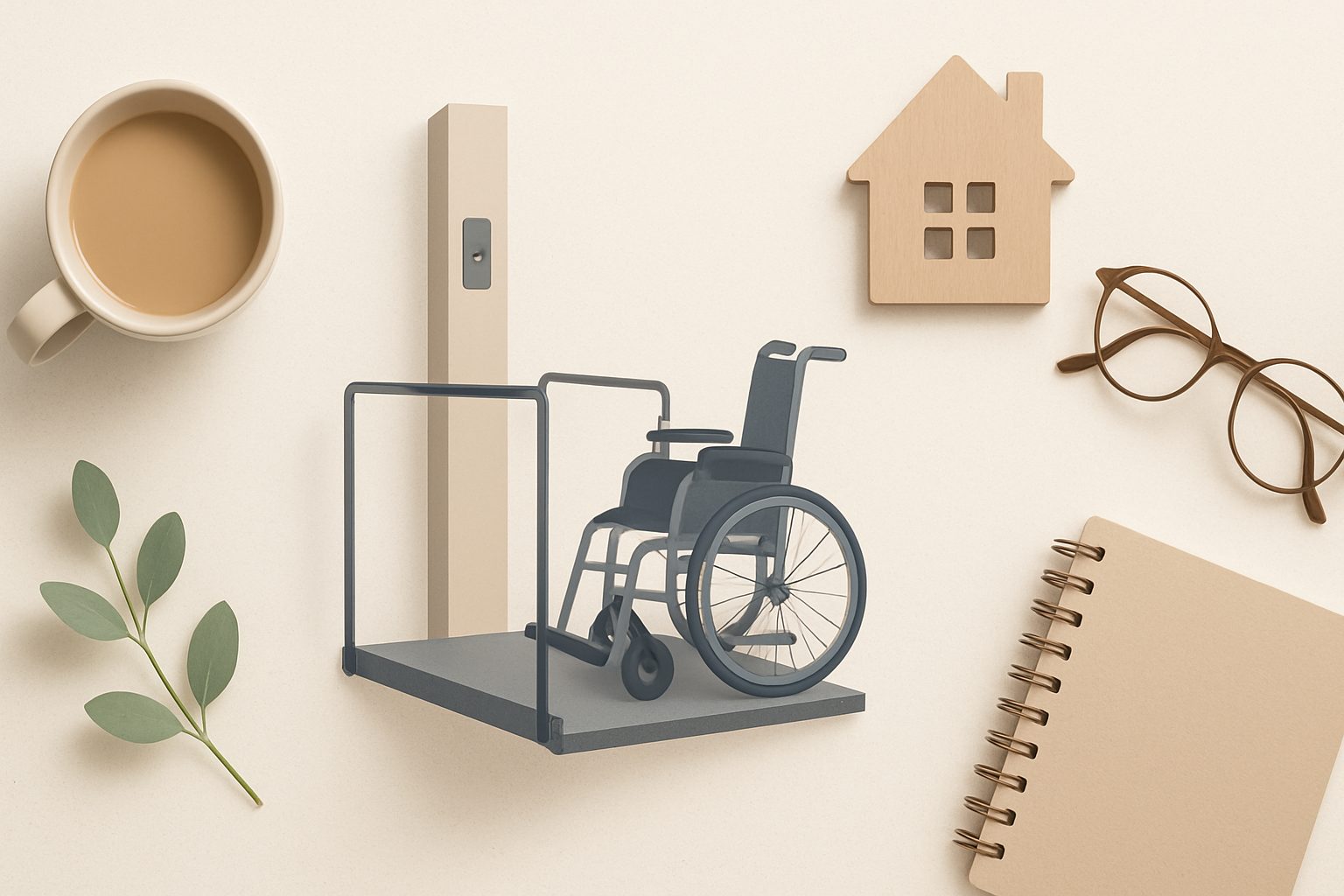
Wheelchair accessibility at home often means navigating stairs — something a standard ramp can't always solve. Platform lifts offer a compact solution where stairs are unavoidable, fitting into hallways or doorways without extensive building work. Unlike stairlifts, they carry a full wheelchair and user, making them ideal for multi-floor homes or buildings with step access.
What to Look for in a Home Wheelchair Lift
Before comparing models, understand what matters for your space. Weight capacity typically ranges from 225kg to 340kg — check this carefully if you need to carry a bariatric wheelchair or additional cargo. Footprint is critical; most vertical platform lifts need 1.2 to 1.5 metres of floor space, though compact models exist. Rise height determines how many steps you can overcome — most domestic units handle 0.75 to 2 metres. Installation varies dramatically: some bolt to existing floors and walls, others require specialist construction. Maintenance contracts typically cost £150 to £300 annually and cover safety checks and repairs. Finally, consider power supply — most require a dedicated 16-amp circuit, though some older properties struggle with this.
Safety certification matters. Look for CE marking and compliance with BS 9818 (the British standard for platform lifts). Genuine models from established manufacturers include regular safety checks as standard.
Leading Models & Brands
Stiltz Homelift (Standard & Compact)
Stiltz dominates the UK market for home use. Their homelift comes in standard (fits most openings) and compact (900mm wide for tight spaces) versions. The platform is fully enclosed, which appeals to users concerned about side safety. Rise heights go up to 3 metres, covering most domestic situations. Installation is relatively straightforward — the frame bolts to your existing floor and walls. Annual maintenance is priced competitively. The main drawback is the enclosed car feels claustrophobic to some users; if you value open design, this isn't ideal.
Stannah Platform Lift
Stannah's platform lift is the alternative most often compared to Stiltz. It's been refined over decades and installation by their network of engineers is reliable. The design is slightly more open than Stiltz, though still protective. They offer good rise-height options and their support network is robust. Pricing is marginally higher than Stiltz, but the service reputation justifies it for many buyers. One limitation: less compact models available, so very tight spaces are harder to accommodate.
Handicare ThyssenKrupp Access Lift
This Swedish-engineered lift is solid but less common in domestic UK settings (more often found in commercial buildings). It offers excellent build quality and smooth operation. Rise heights and weight capacity are competitive. The trade-off: fewer local engineers mean longer wait times for maintenance, and fewer rental options if you want to trial one first.
TK Elevators (residential range)
TK Elevators offers platform lifts aimed at residential use. Specification and pricing sit between budget and premium options. Design is functional rather than stylish. They're a viable middle-ground if you want established support without Stannah or Stiltz premium pricing.
Budget alternatives: Domestic Lifts Ltd, others
Smaller manufacturers exist at lower price points (£8,000–£12,000 for basic models). Quality control is less consistent; many don't have nationwide servicing networks, which becomes problematic if something fails. For most people, the extra upfront cost for Stiltz or Stannah is worth the peace of mind.
Pros & Cons at a Glance
| Model | Main Pros | Main Cons | Rise | Approx. Price | |-----------|--------------|--------------|---------|-------------------| | Stiltz Standard | Market leader, smooth, good rise options, reliable parts supply | Enclosed design feels tight | Up to 3m | £12,000–£18,000 | | Stiltz Compact | Fits very small spaces, same reliability | Tighter feel than standard | Up to 2m | £13,000–£18,500 | | Stannah Platform | Excellent service network, open design, smooth operation | Higher cost, fewer compact options | Up to 2.5m | £14,000–£20,000 | | Handicare/TK | Solid engineering, competitive spec | Smaller UK support network, fewer dealers | Up to 2m | £11,000–£17,000 | | Budget providers | Lower upfront cost | Inconsistent quality, limited support | Up to 1.5m | £8,000–£12,000 |
Price & Installation Reality
Expect to pay £10,000–£20,000 for a decent domestic lift from an established maker, plus £1,500–£3,000 in installation (unless significant building work is needed). The enclosed design tends to cost more than open platforms, though it's safer. Some installers bundle ongoing maintenance into a service package; others charge per visit. An annual contract typically runs £150–£300, covering routine servicing and emergency callouts.
Grants exist through local councils and some disability charities — means-tested and competitive, but worth investigating if cost is a barrier.
Getting the Right Fit
The "best" lift depends on your exact space and needs. Stiltz works for 80% of UK homes seeking a compact, reliable option. Stannah suits those who prioritise service redundancy or prefer an open design. Handicare and TK are solid if you've found a local dealer you trust.
Visit showrooms if possible — what feels right on paper often surprises you in person. Check whether your preferred model will fit your available space by having a surveyor visit (most are free). Ask about trial periods; some dealers offer short-term rental so you can test before buying.
Home wheelchair lifts are a significant investment, but they genuinely transform accessibility. Choose based on honest space assessment and reliable support, not just price.
More options
- Portable Wheelchair Platform Lifts – Amazon UK (Amazon UK)
- Folding Wheelchair Ramps – Amazon UK (Amazon UK)
- Suitcase & Travel Wheelchair Ramps – Amazon UK (Amazon UK)
- Threshold & Kerb Ramps – Amazon UK (Amazon UK)
- Stairlift & Platform Lift Accessories – Amazon UK (Amazon UK)